
These innovative tools enable a simplification of the creative process, a reduction in production costs, and open the door to creative possibilities previously unimaginable. Among the most notable advances, some software stands out for its ability to rethink video creation and production. Here are five recent AI tools that promise to change the game.
Pika
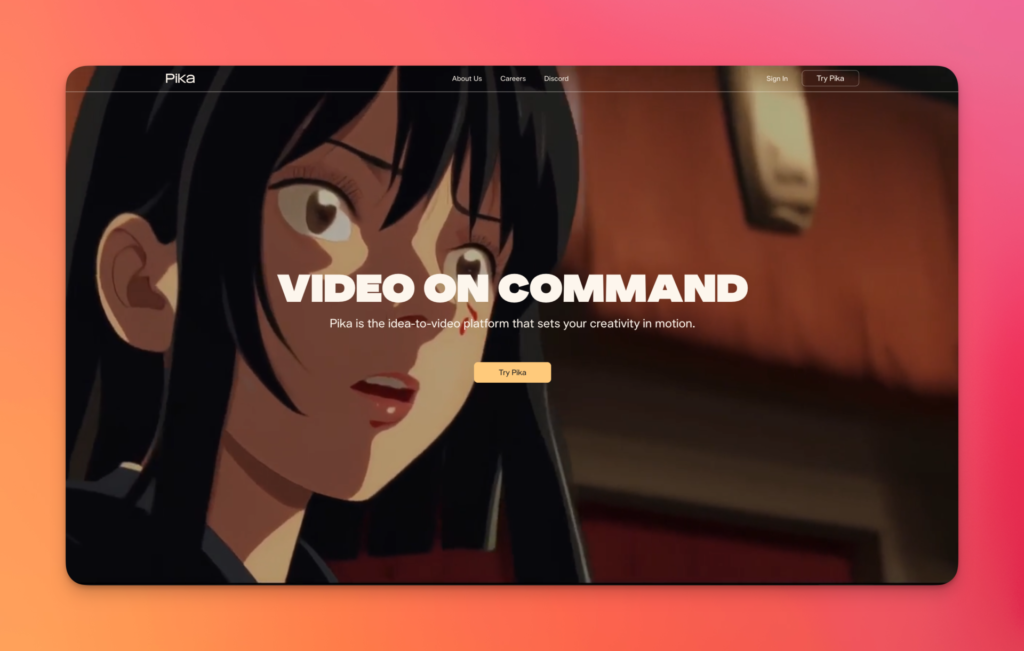
Pika AI is an artificial intelligence-based video generator that works on the text-to-video principle.
The user writes a prompt describing the desired style, scene, action and mood for the video; Pika AI then generates a video sequence based on this prompt.
The user can adjust certain parameters such as aspect ratio, number of frames per second, camera movements, etc.
Generating videos from images
- Pika AI can also generate videos from existing images, such as those created with AI tools like Midjourney or DALL-E.
- The user can import an image and Pika AI will animate it and set it in motion to create a short video.
Editing and modifying videos
- Pika AI also offers editing features, allowing you to add elements to existing videos, change their framing or point of view.
Recent developments
- Pika AI has recently undergone a major update (version 1.0) improving the quality of the results generated.
- A web interface has also been developed, complementing the initial access via a Discord server.
In summary, Pika AI is a powerful tool for easily creating videos from simple text descriptions or images, with numerous adjustment and editing possibilities.
Sora
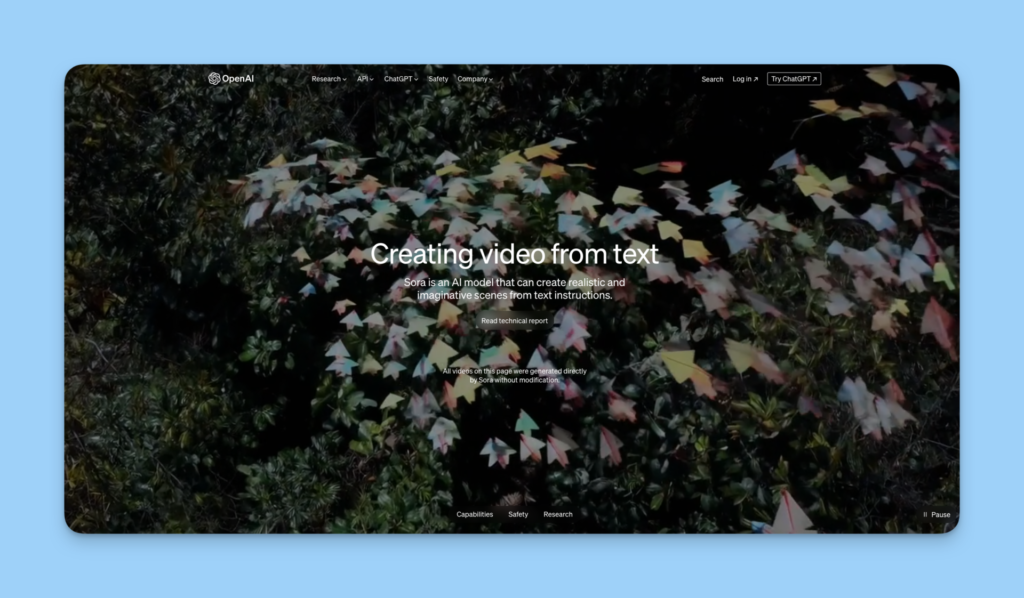
Sora AI is a text-based video generation model developed by OpenAI. It is a virtual assistant with advanced artificial intelligence, capable of creating realistic and imaginative videos from simple text descriptions.
Read our article to find out more about Sora: Sora: How OpenAI will revolutionize video production
Generating text to video
- Sora AI uses a “diffusion transformers” architecture to progressively transform random noise into coherent, detailed video.
- The model works in latent space rather than directly on pixels, making it more efficient.
- Sora relies on a vast text-video dataset to learn how to interpret text prompts and generate corresponding visual sequences.
Capabilities and limitations
- Sora can create videos up to one minute long, with realistic characters, movements and details.
- However, the model can sometimes have difficulty with accurate simulation of physics or tracking complex events over time.
Safety considerations
- Given the realism of the videos generated, Sora raises concerns about deepfakes and misinformation.
- OpenAI is therefore conducting extensive tests with experts to identify and mitigate these risks before any public release.
Official website: Visit Sora
Viggle
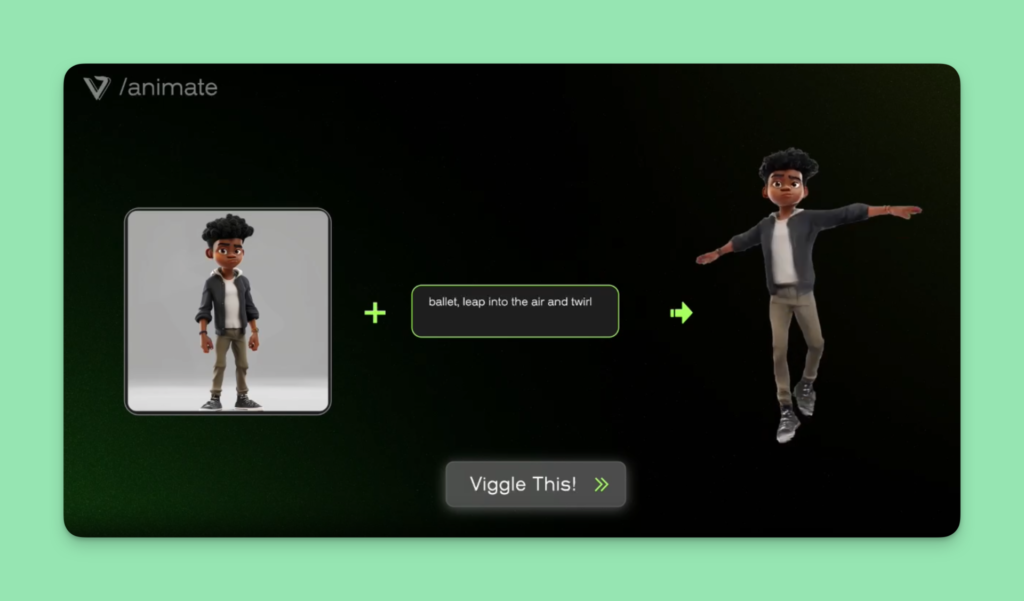
Viggle AI is an artificial intelligence-based video generator specializing in the creation of character-centric content. It’s a revolutionary tool that dramatically simplifies the animation process, making the creation of engaging, coherent videos accessible to everyone, in just a few minutes.
Generating videos from text descriptions
The user provides a prompt describing the desired style, scene, action and mood, and Viggle AI then generates a corresponding video sequence.
Editing and modifying videos
Viggle AI offers editing tools for adding elements, changing the framing or point of view of existing videos.
Advanced customization
The user can adjust various parameters such as aspect ratio, number of frames per second or camera movements.
Integration with other AI tools
Viggle AI can be used in conjunction with other solutions such as Runway ML or Lensgo AI to optimize the creative process.
Official website: Visit Viggle
Runway Gen 2
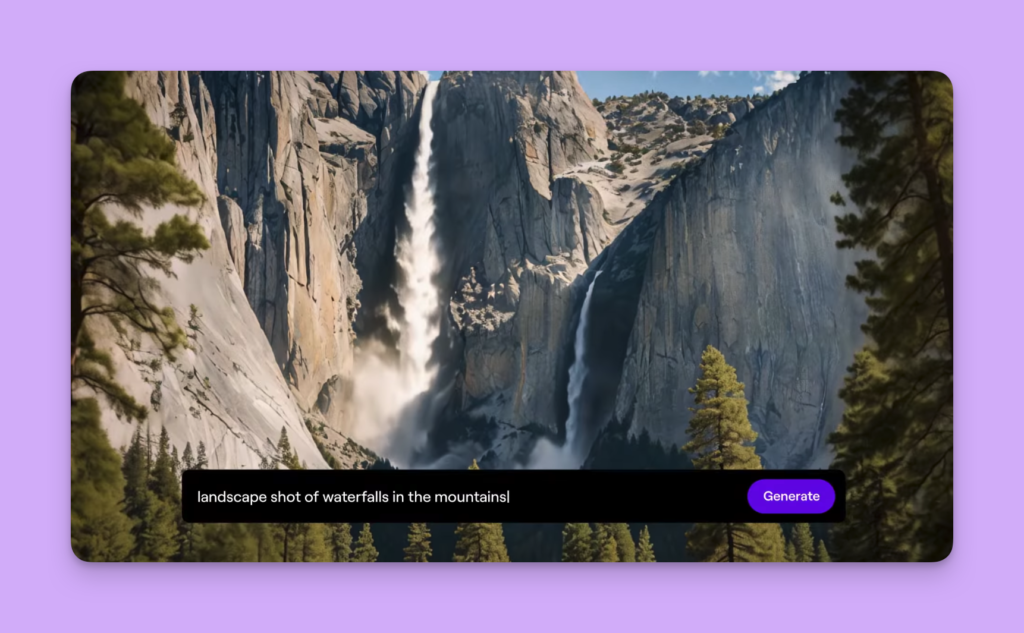
Runway Gen-2 is an artificial intelligence-based video generation tool developed by the Runway company. It is a major evolution of Runway’s video generation technology, offering enhanced capabilities in terms of quality, consistency and control.
Generating videos from text prompts
The user provides a prompt describing the desired style, scene, action and mood, and Runway Gen-2 then generates a corresponding video sequence.
Editing and modifying videos
Runway Gen-2 offers editing tools for adding elements, changing the framing or point of view of existing videos.
Advanced customization
The user can adjust various parameters such as aspect ratio, number of frames per second or camera movements.
Increased resolution and quality
The latest Runway Gen-2 update has significantly improved the resolution, fluidity and realism of the videos generated.
Integration with other AI tools
Runway Gen-2 can be used alongside other solutions such as Runway ML or Lensgo AI to optimize the creation process.
Official website: Visit Runway
Stable Video Broadcast
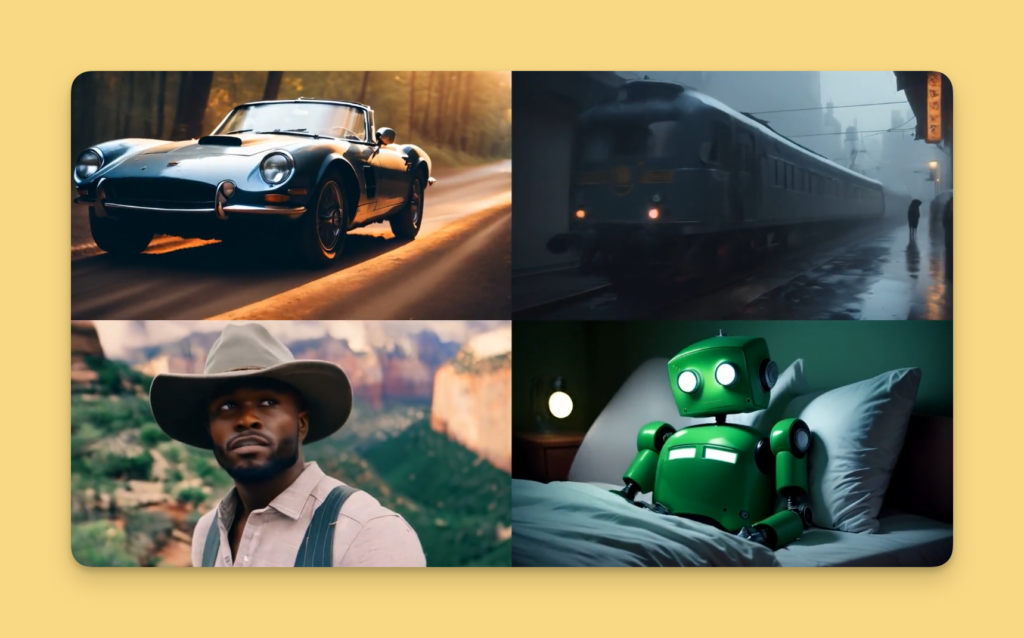
Runway Stable Diffusion Video is an artificial intelligence-based video generation tool developed by the Runway company. It is an evolution of the Stable Diffusion model, originally designed for image generation, which has been adapted for the creation of video content.
Generate text to video
The user provides a prompt describing the desired style, scene, action and mood, and the template then generates a corresponding video sequence.
Transformation of existing videos
Runway Stable Diffusion Video can apply the style and composition of an image or text to a source video, to create a new version.
Editing and modifying videos
The tool offers editing features for adding elements, changing the framing or point of view of videos.
Advanced customization
The user can adjust various parameters such as aspect ratio, number of frames per second or camera movements.
Access to the model: Stability AI GitHub
What impact on the film industry and content production?
New video AI tools could have significant impacts on various aspects of the film industry.
Transformation of Film Production
AI tools like Pika and Runway could revolutionize film production by automating and optimizing complex creative processes.
They could offer the possibility of creating ultra-realistic virtual sets, simulating specific weather conditions or generating huge crowds, all with an unprecedented degree of precision and ease.
These capabilities would reduce production costs and time, making film creation more accessible to a wider range of creators.
Virtual Characters and Animation
The use of AI to create hyper-realistic virtual characters or to animate complex scenes opens up new creative perspectives.
Tools like Sora can generate expressive digital characters that can act in scenes impossible for real actors, while platforms like Runway or Viggle use AI to simplify animation processes, making professional-quality animation more accessible to studios of all sizes.
Impacts on Post-Production
Post-production is another area where AI tools will be able to make significant changes.
The editing, coloring, dubbing, and even soundtrack creationcould be greatly improved and accelerated thanks to video generative AI.
These technologies could enable large-scale personalization, where elements of a film could be adjusted according to audience preferences or specific distributor requirements.
Related Articles
AI Act and CNIL: How AI Regulation Is Changing France in 2026
Artificial intelligence is weaving its way into our daily lives, often without us even noticing. Your bank’s chatbot, your email’s spam filter, the algorithm recommending shows on Netflix—all are AI…
Lyria 3: The Generative Musical AI by Google DeepMind – Complete Guide
Imagine being able to describe a musical atmosphere in just a few words and receive an original composition within seconds. That’s exactly what Lyria 3, the generative musical AI model…