
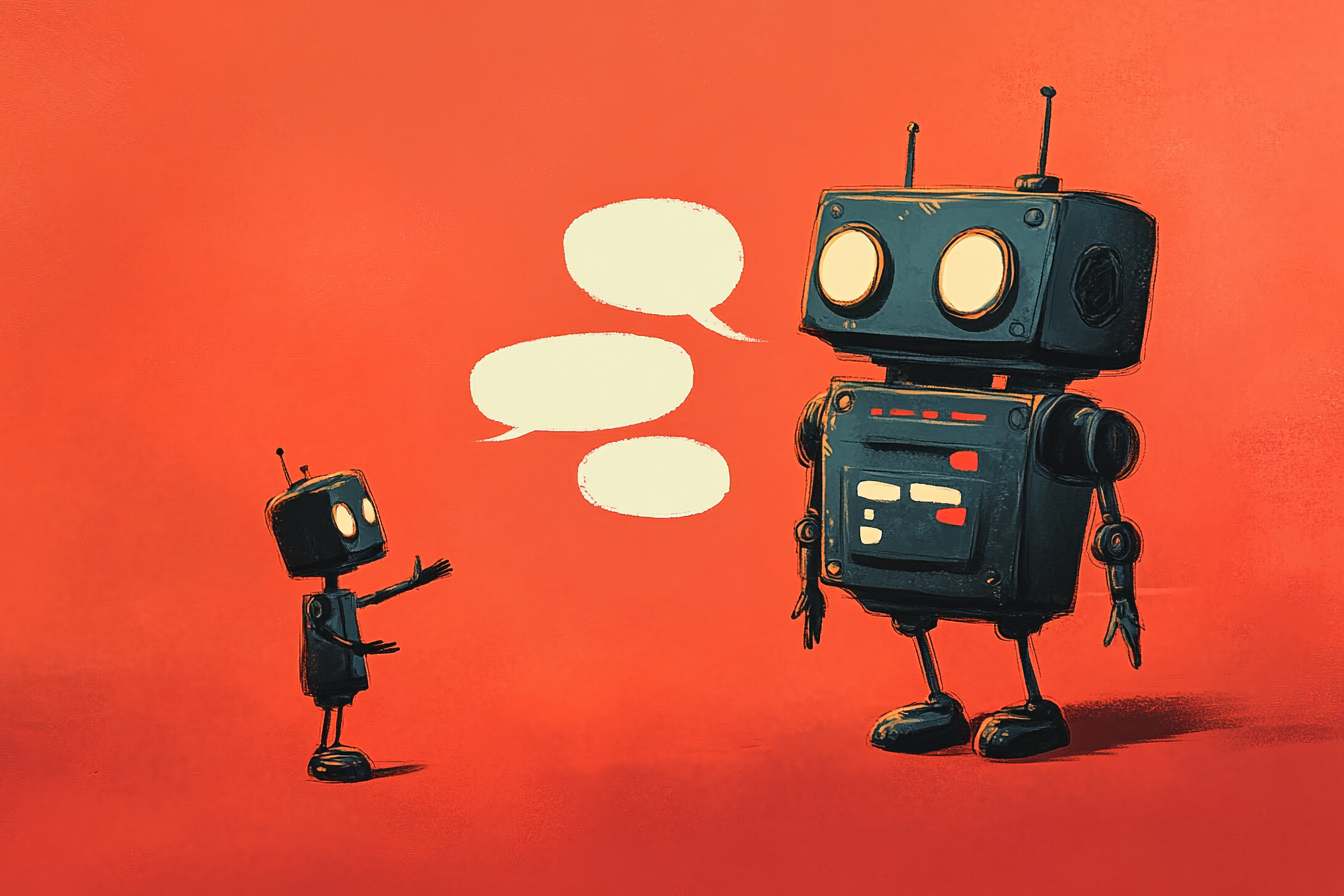
OpenAI has recently introduced two new models that are generating a lot of interest: GPT-4o and GPT-4o-mini. Although these models share a common technological base, they are designed to meet different needs.
In this article, we’ll explore in depth the differences between these two models to help you determine which is best suited to your projects.
A common technological base
The GPT-4o and GPT-4o-mini models, although different in size, performance and cost, share a common technology base that gives themsimilar capabilities in natural language processing (NLP).
Here are the key elements they share:
Architecture transformer
Both templates use the Architecture Transformer, which is the cornerstone of modern text generation templates.
This architecture enables better management of long-range dependencies in text, which is essential for understanding and generating fluid, contextual natural language.
Pre-training on large corpora
GPT-4o and GPT-4o-mini are both pre-trained on massive corpora of textual data from a variety of sources, including books, articles, websites, etc.
This pre-training enables them to acquire a broad understanding of language and general knowledge, which is then refined through specific tuning processes.
Alignment via RLHF (Reinforcement Learning with Human Feedback)
Both models benefit from post-training alignment via RLHF, a method that involves the use of human feedback to adjust the responses generated by the models.
This technique improves their ability to produce answers that are more accurate, reliable and in line with user expectations.
Multimodal capabilities
GPT-4o and GPT-4o-mini are capable of processing not only text, but also multimodal input, enabling them to understand and generate content based on images or visual descriptions.
This capability is particularly useful in applications such as image recognition or visual data analysis.
Security and content filtering
Both templates incorporate security mechanisms to filter out unwanted content such as hate speech, adult content or sensitive information.
This includes measures to resist jailbreak or prompt manipulation attempts, ensuring safer use in sensitive environments.
API and development tools
GPT-4o and GPT-4o-mini are both available via the same APIs from OpenAI, making them easy to integrate into web applications, virtual assistants, or other systems using artificial intelligence.
This offers flexibility for developers looking to leverage the capabilities of these models in a variety of contexts, whether in the cloud or on the edge.
Comparative between GPT-4o and GPT-4o Mini
Architecture and model size
GPT-4o: This model is the more powerful of the two, with an architecture that includes 175 billion parameters. This impressive size enables more nuanced understanding and more sophisticated text generation, ideal for complex tasks requiring analytical depth.
GPT-4o-mini: Designed to be lighter, this model contains 1.5 billion parameters. Although this slightly reduces its ability to handle complex tasks, it retains notable performance for a wide range of applications, while being faster and less resource-hungry.
Performance and precision
GPT-4o: This model excels in accuracy, particularly for tasks requiring deep analysis and nuanced responses. It is superior in performance on benchmarks such as GLUE and HumanEval, making it the preferred choice for critical applications where accuracy is paramount.
GPT-4o-mini: Although slightly less accurate than GPT-4o in complex tasks, GPT-4o-mini stands out for its efficiency in contexts requiring fast execution. It outperforms many other smaller models on tasks such as mathematical reasoning and coding.
Speed and efficiency
GPT-4o: Despite its power, GPT-4o is slightly slower in terms of response time than its mini counterpart.
This is due to the complexity of its architecture, which, while beneficial for response quality, results in a longer processing time.
GPT-4o-mini: With shorter latency and faster token generation speed, this model is ideal for real-time applications where speed is crucial.
It’s particularly suited to environments with low computing capacity, such as mobile devices or IoT solutions.
Cost and accessibility
GPT-4o: As a premium model, GPT-4o is more expensive to deploy, both in terms of resource consumption and API costs.
It is, however, the ideal choice for projects where budget is less of a constraint and the quality of results is a priority.
GPT-4o-mini: This model is designed to be more economical, with significantly reduced costs per token.
This makes it particularly attractive for companies looking to integrate AI on a large scale without blowing their budget.
Ideal use cases
GPT-4o: This model is perfect for applications requiring advanced natural language understanding, such as academic research, highly specialized content creation, or sophisticated virtual assistants.
GPT-4o-mini: Ideal for more routine tasks such as content generation, chatbots, or real-time response systems.
Its low cost and speed make it an excellent option for SMEs or individual developers looking to integrate AI into existing solutions.
See our articles on GPT models:
- ChatGPT 3.5 and ChatGPT 4: What are the differences?
- GPT-4o chat: The AI that redefines multimodal interaction
- GPT 4 Turbo chat: Technical details and comparison with GPT-4
- GPT-4o Mini: Performance, speed and economy for AI
Conclusion
The choice between GPT-4o and GPT-4o-mini depends largely on your specific requirements.
If you’re looking for a solution that can handle complex tasks with great precision, and cost isn’t an issue, GPT-4o is the obvious choice.
On the other hand:
If you need a model that is fast, economical, and powerful enough for most standard applications, GPT-4o-mini proves to be an excellent alternative.
In any case, these two models represent a significant advance in the field of artificial intelligence, offering solutions tailored to a wide range of industrial and commercial needs.
Related Articles

What if we got rid of all politicians? The (not so crazy) case for AI-driven governance
From envelopes under the table to the world’s shadiest power networks, the verdict is always the same: Those who govern us seem to play in a league of their own—the…

Ai agents make.com : complete guide 2026 vs n8n
Did you think no-code automation had reached its limits? Make.com has just shattered that certainty with its AI Agents, a feature that turns the platform into a truly autonomous brain….