

New Features and Enhancements
Ideogram has established itself as the go-to AI image generator for anyone who needs accurate text rendering in images. Since the release of Ideogram 2.0, the platform has continued to evolve significantly. With Ideogram 3.0 launched in March 2025, the tool now delivers even more impressive capabilities that make it essential for graphic designers, marketers, and content creators in 2026.
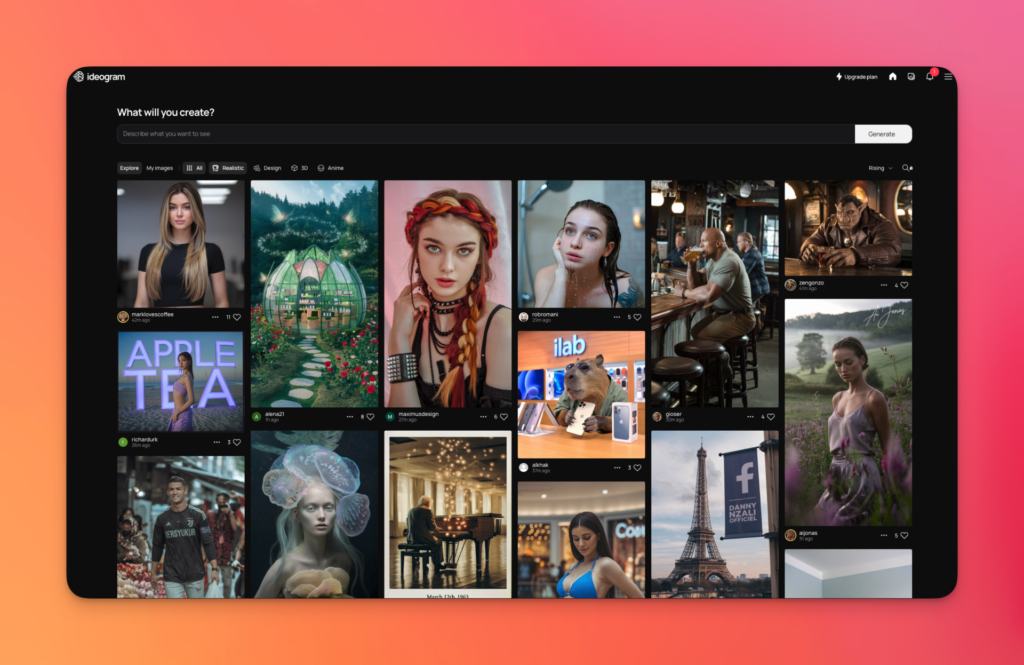
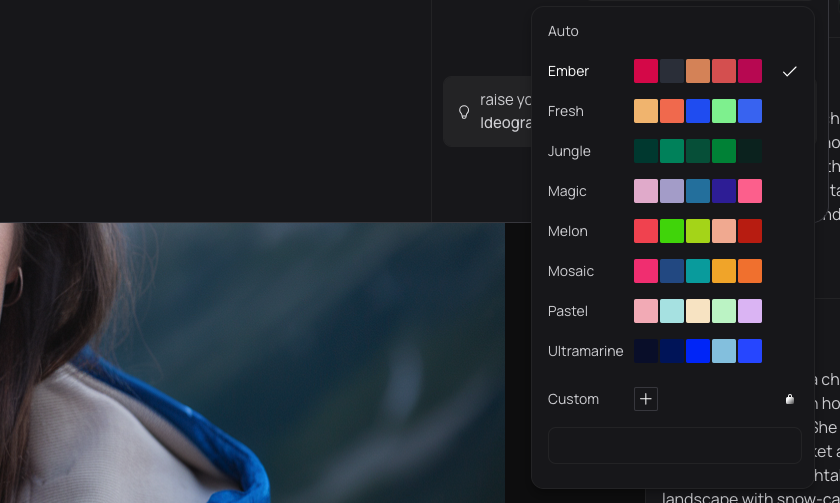
Custom Color Palette
Ideogram offers advanced color control that lets designers specify exact color palettes for their generations. This ensures brand consistency across all visual assets. In version 3.0, the color palette system has been enhanced with more precise color matching and the ability to extract palettes from reference images.
Improved Photo-Realistic Rendering
Ideogram 3.0 delivers a significant leap in photorealism. Human evaluations consistently rank it among the highest-scoring text-to-image models, with particularly strong performance in prompt alignment and image quality. The rendering of faces, lighting, and textures has improved dramatically compared to version 2.0.
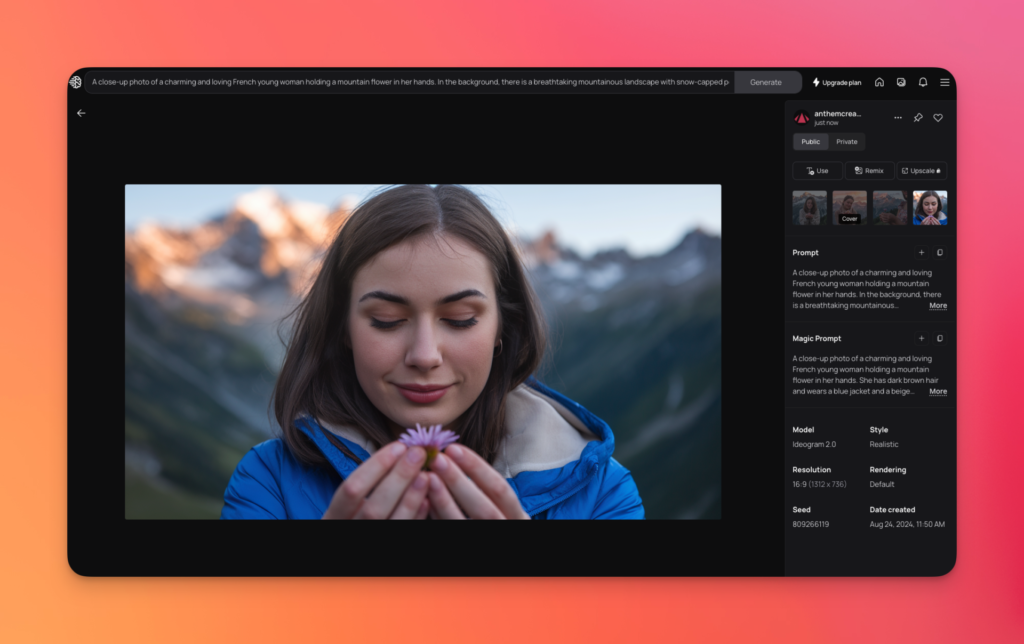
Optimized Text Rendering Engine
This remains Ideogram’s flagship feature. The text rendering accuracy now sits at around 90-95% accuracy, compared to roughly 30% for competitors like Midjourney. Whether you need logos, posters, social media graphics, or marketing materials with text, Ideogram consistently produces readable, well-integrated typography within generated images.
Originality and Competitive Advantages
Design-Oriented Image Generation
Unlike competitors that focus primarily on artistic or photographic outputs, Ideogram is purpose-built for design work. The platform excels at generating images that can be directly used in professional design workflows: social media posts, advertisements, branding materials, and presentation slides.
Style References — New in 3.0
One of the most powerful features introduced in Ideogram 3.0 is Style References. You can upload up to 3 reference images to guide the aesthetic of your generations. This enables you to quickly replicate styles that are difficult to describe in text prompts. A Style Code system lets you save and reuse successful configurations, while the Random style feature accesses 4.3 billion preset combinations for inspiration.
Accessibility and Pricing
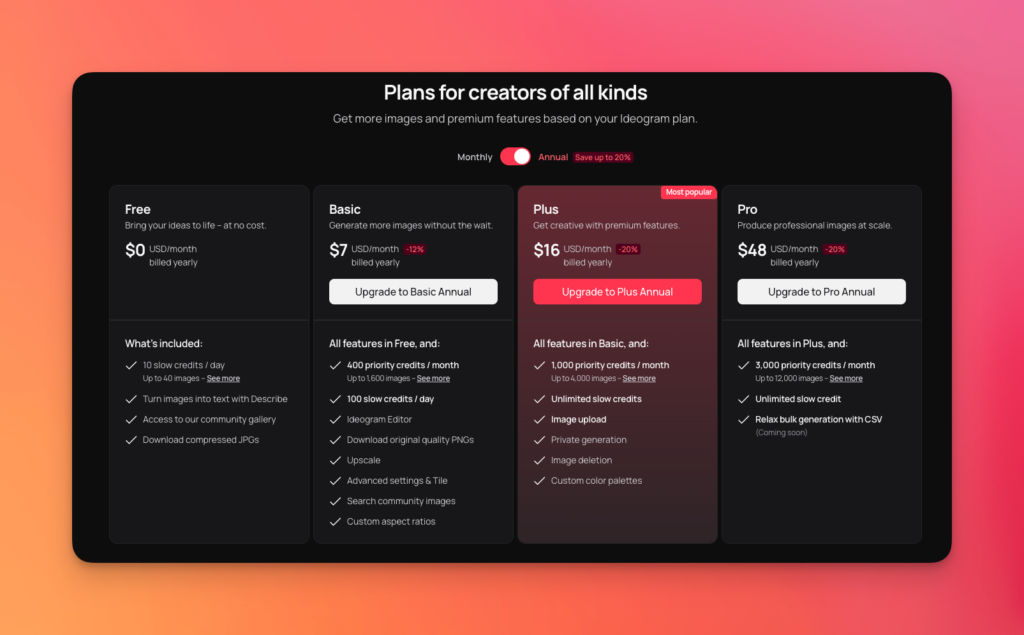
Ideogram remains accessible with a generous free tier that lets you generate images daily without a subscription. Paid plans offer higher generation limits, priority processing, and additional features. The platform is entirely web-based, requiring no installation or technical setup.
Magic Prompt and Advanced Features
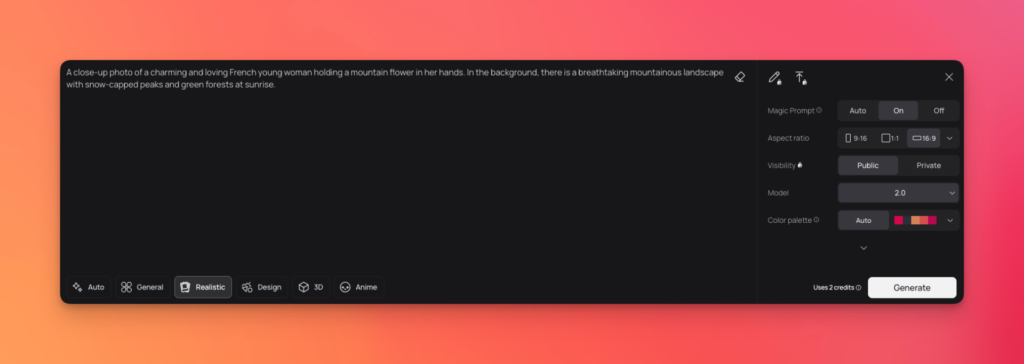
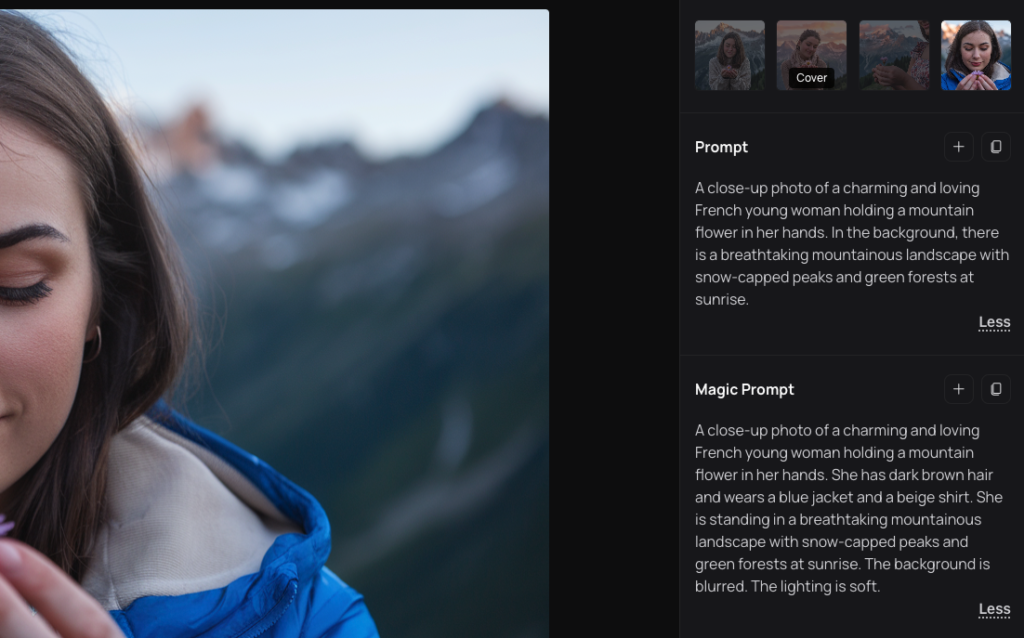
Ideogram’s Magic Prompt feature automatically enhances your text descriptions to produce better results. It expands simple prompts into more detailed instructions that guide the AI toward higher-quality outputs. In 3.0, the platform also includes inpainting (modifying specific parts of an image) and outpainting (extending image boundaries), making it a more complete creative tool.
Batch generation capabilities allow you to scale design production quickly, generating multiple variations of a concept for rapid prototyping and A/B testing of visual assets.
Possible Uses of Ideogram AI
Social media marketing: Generate on-brand visuals with accurate text for Instagram posts, stories, and ads.
Logo prototyping: Quickly explore logo concepts with legible text elements before refining with professional tools.
Presentations: Create custom slide illustrations with integrated text and consistent styling.
E-commerce: Generate product mockups and promotional banners with precise typography.
Print design: Prototype posters, flyers, and brochures with text that’s actually readable.
Content creation: Produce blog thumbnails, YouTube covers, and newsletter headers with text overlays.
Comparison: Ideogram 3.0 vs Flux.2
Both Ideogram and Flux are top-tier AI image generators in 2026, but they serve different primary purposes. Ideogram excels at text rendering and design-oriented outputs, making it the better choice for marketing materials, logos, and any image that requires legible text. Flux excels at photorealistic image generation and offers more flexibility through its open-source ecosystem, LoRA models, and local deployment options.
For designers who need text in their images, Ideogram is the clear winner. For photographers, artists, and creators who prioritize raw image quality and customization, Flux remains the stronger option. Many professionals use both tools as part of their creative workflow.
Conclusion
Ideogram has evolved from a promising newcomer to a leading AI image generation platform in 2026. With version 3.0’s Style References, improved photorealism, and still-unmatched text rendering accuracy, it offers capabilities that no other tool can fully replicate. Whether you’re a graphic designer, marketer, or content creator, Ideogram deserves a place in your creative toolkit — especially if your work involves any form of text-integrated visual design.
Related Articles
What is Jev? The AI model that doesn’t generate text
Jev IA, lancé par TypeSafe le 15 septembre 2026, classe et note au lieu d’écrire. Fonctionnement, prix, limites et ce que cela change pour votre logiciel.

OpenAI dots: are these agents truly useful or just marketing?
OpenAI dots promet des agents toujours actifs. Ce que l’annonce dit, ce qu’elle ne dit pas, et ce qu’une PME peut en faire maintenant.