

Zapier and Make.com (formerly Integromat) are the two leading no-code automation platforms in 2026. With the rise of AI and autonomous agents, these tools have evolved dramatically since their early days. But which one should you choose for your needs? Here is a comprehensive comparison updated for 2026.
Zapier vs Make.com: 2026 Overview
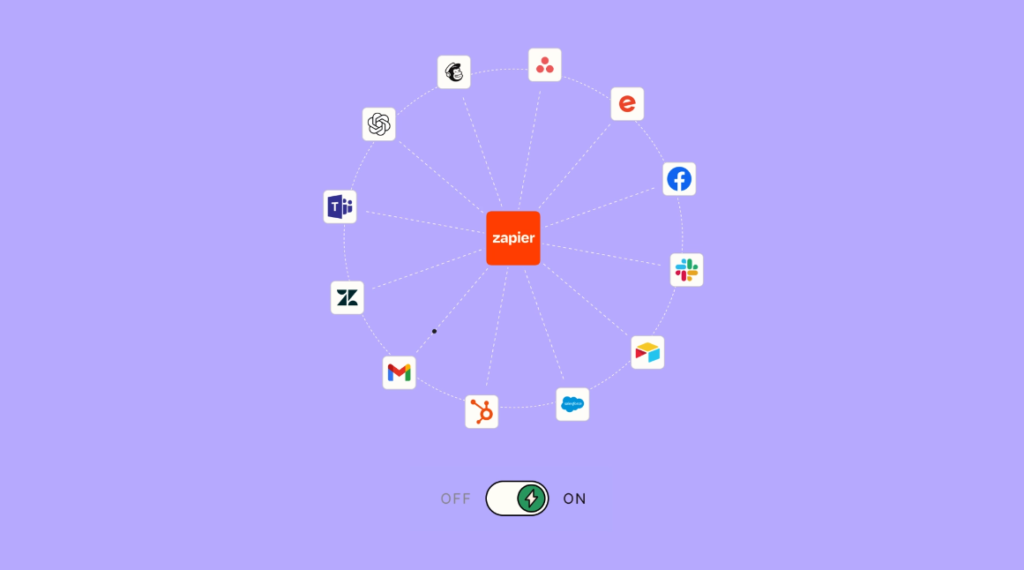
Zapier focuses on simplicity and ecosystem breadth: over 8,000 integrated apps, a linear step-by-step interface, and advanced AI features including Zapier AI Agents and Zapier MCP (which lets Claude and ChatGPT interact directly with your connected apps). Make.com prioritizes power and flexibility: a visual drag-and-drop editor, approximately 2,800 integrations (but with more actions per integration), and advanced handling of branching, loops, and conditional logic.

Pricing: Advantage Make.com
On pricing, Make.com is significantly cheaper. The Basic plan at roughly $9/month offers 10,000 operations, compared to $19.99/month for 750 tasks on Zapier’s Starter plan. However, the two platforms count usage differently. Zapier charges per “task” (each action step counts, the trigger is free), while Make charges per “operation” (every executed module counts). In practice, a Make workflow often consumes more operations than an equivalent Zapier workflow does in tasks. Despite this, Make generally remains more cost-effective for high-volume users.
Interface and Ease of Use
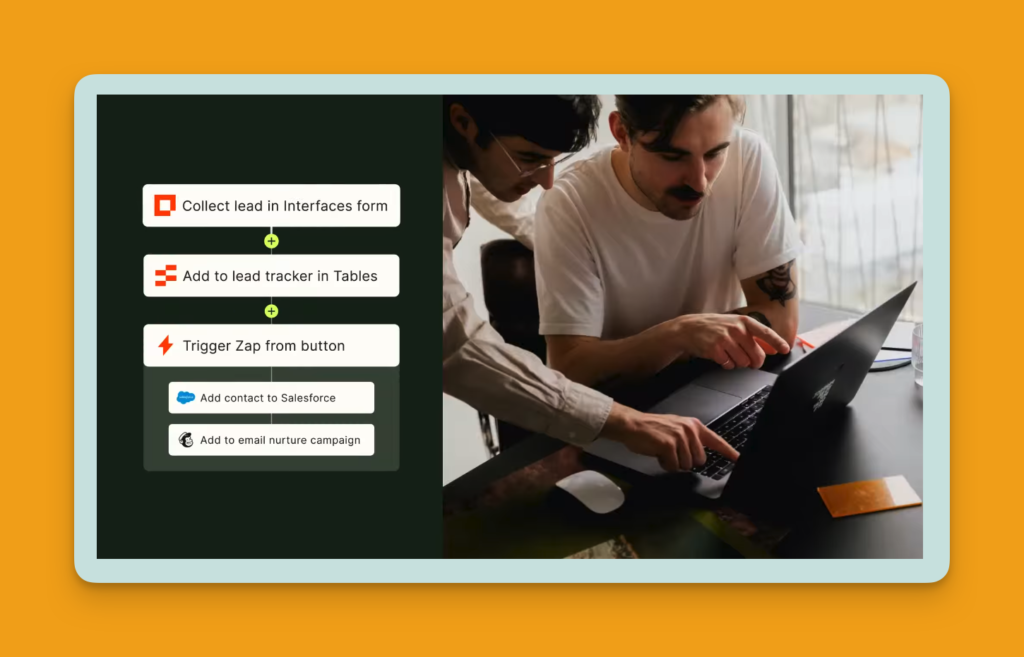
Zapier shines with its simplicity. Its linear editor lets you create a working automation in minutes, even without technical experience. It’s the ideal platform for beginners and simple automations (e.g., when I receive an email with an attachment, save it to Google Drive and notify on Slack). Make.com offers a more powerful visual canvas but with a steeper learning curve. Its interface enables complex workflows with multiple routes, iterators, and aggregators — essential features for advanced scenarios.
AI Capabilities and Agents in 2026
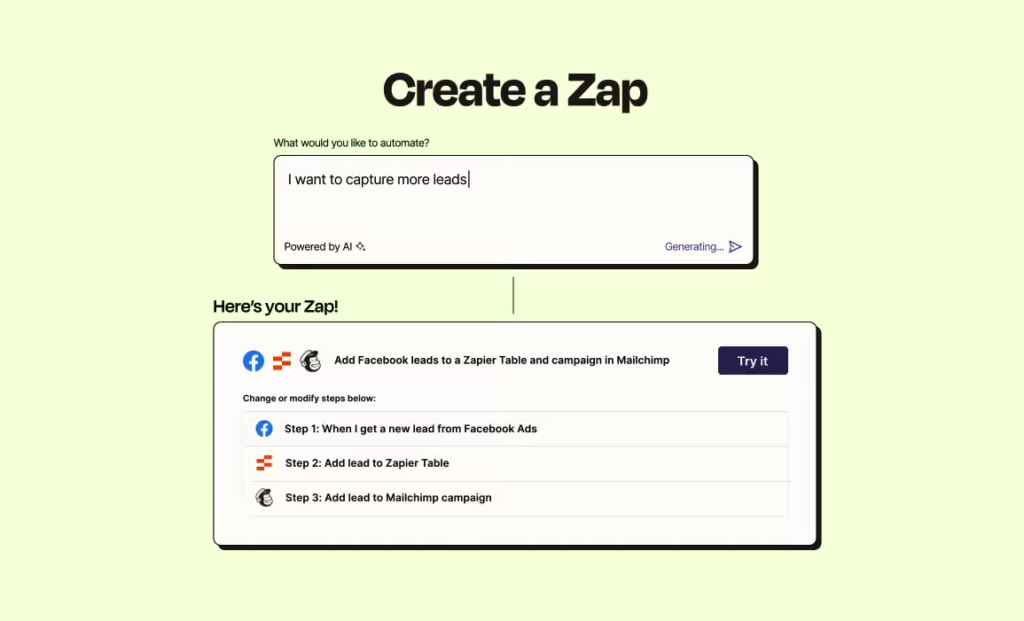
This is where both platforms have innovated most in 2025-2026. Zapier offers integrations with over 250 AI tools (ChatGPT, Claude, Gemini, Jasper…) and launched AI Agents capable of fetching information and executing actions across connected apps. Zapier MCP even allows LLMs to interact directly with the Zapier ecosystem. Make.com lets you build AI agents directly on its visual canvas with full transparency through step-by-step logs. Agents can dynamically choose the optimal route instead of following hardcoded logic. A notable competitor has also emerged: n8n, an open-source automation platform gaining popularity for self-hosted AI workflows.
Integrations: Quantity vs Depth
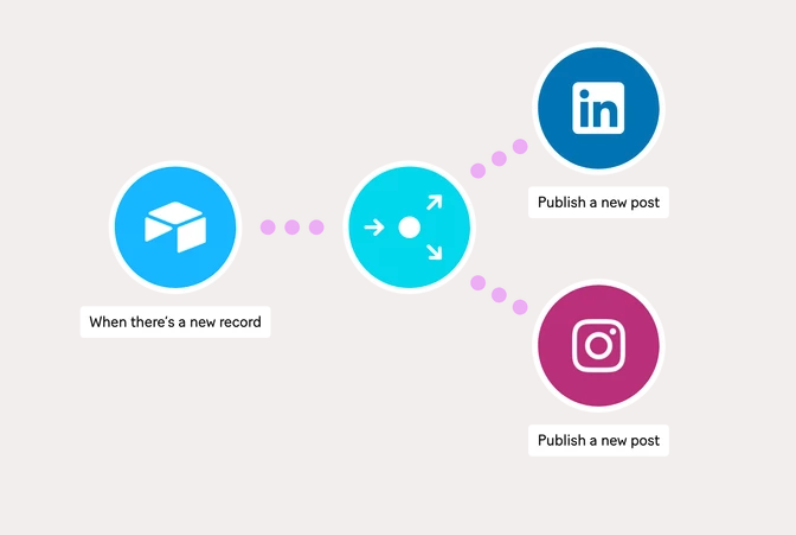
Zapier dominates in sheer integration count (8,000+ vs 2,800). If you use niche tools, chances are Zapier supports them. However, Make.com often provides deeper coverage per app: where Zapier offers a few basic actions for a tool, Make may provide dozens. For common applications (Google Workspace, Slack, HubSpot, Notion, Airtable), both platforms are perfectly equipped.
Which Tool to Choose in 2026?
Choose Zapier if you’re new to automation, need integrations with niche tools, want quick results without a learning curve, or want to leverage the Zapier MCP ecosystem with AI agents. Choose Make.com if you’re technically comfortable, have complex workflows with multiple branches, process high volumes (better value for money), or want full visibility into your automation logic. Either way, both platforms offer free plans that let you test before committing.
Related Articles

Agentik vs Monid: comparing AI agent tools
Connecting an AI agent to the real web quickly becomes like juggling a bunch of keys. A web search here, a scraping tool there, a contact enrichment service, an image…

What is Jev? The AI model that doesn’t generate text
Jev IA, lancé par TypeSafe le 15 septembre 2026, classe et note au lieu d’écrire. Fonctionnement, prix, limites et ce que cela change pour votre logiciel.